Marijuana Redux
Oct 10th, 2026 | By Dr. Jim Eckman | Category: Culture & Wordview, Featured IssuesThe mission of Issues in Perspective is to provide thoughtful, historical and biblically-centered perspectives on current ethical and cultural issues.
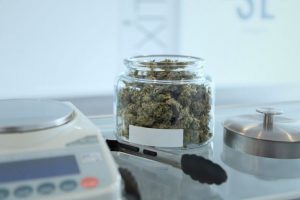
I have addressed the subject of marijuana several times on Issues in Perspective. Clearly, American culture has been moving in the direction of full acceptance of marijuana and its full legalization. But the accommodation to marijuana is not simply an issue of freedom and autonomy—doing whatever you want without the restrictions or regulations of the state. Marijuana is dangerous and we need to frame the issue not around the freedom of the individual, or what Carl Trueman calls “expressive individualism,” but around the issue of the public good.
Sivabalaji Kaliamurthy of the Children’s National Hospital reminds us of the nature of marijuana today: “Americans have been using cannabis for generations, but today the drug is more available, more socially accepted and far more potent than ever. Legalization and decriminalization have brought about rapid changes in the marketplace, and dispensaries around the country now sell plant buds alongside highly concentrated vape cartridges, gummies, edibles, waxes and beverages infused with the psychoactive compound THC. These newer products are specifically engineered to deliver THC in ways that are often more convenient and discreet than smoking cannabis. That shift is especially concerning for adolescents, whose brains are still developing and are more vulnerable to the effects of repeated exposure to high levels of THC.
A few decades ago, the typical cannabis plant contained 2 to 5 percent THC, and the more potent products averaged around 10 percent. Today’s cannabis bud products often contain 20 percent THC, while cartridges and concentrates can exceed 70 percent THC. This means the one in four high school seniors who reported experimenting with cannabis in 2025 almost certainly used it in a much more potent form than many people of a previous generation did growing up. And policymakers have done little to protect them.”
George Will writes that “Only two states cap permissible levels of THC (marijuana’s intoxicating component). Jonathan P. Caulkins of Carnegie Mellon University, in a report on ‘alternatives to prohibitions,’ says: ‘The THC content of seized marijuana never exceeded 5% before 2000; but soon after legalization’ the labeled potency of some products sold in state-licensed stores ‘routinely exceeded 20%,’ and other products are now supplemented by ‘extract-based products with THC content of 60% or even 90%.’ Decriminalization of marijuana for customers, and/or legalization of suppliers, has produced a novel American moment. Two years ago, a clinical psychologist and neuroscientist told the New York Times: There is no U.S. precedent for a drug—a rapidly evolving one—concerning which doctors have said, ‘Go experiment and tell me what happens.’”
Several key thoughts:
Allysia Finley of the Wall Street Journal recently interviewed Kevin Sabet, a respected critic of the mainstream acceptance of marijuana. Her report evidences how widespread the use of marijuana actually is: “About one-third of Americans in their 20s admitted in 2024 to having used marijuana in the previous month. As did 1 in 5 of those 35 to 50. More Americans now report using marijuana nearly every day than drinking alcohol . . . [Indeed,]Twenty-four states and the District of Columbia have legalized marijuana for recreational consumption, and every state except Idaho and Kansas permits its use for putative medical purposes.”
But is the cultural tide on marijuana ebbing in America? Kevin Sabet, who has led a countercultural movement against pot, believes it is. “People are seeing with their own eyes, and I think frankly smelling with their own nose,” Mr. Sabet, 47, says in a phone interview. “They see that there are more people with a marijuana addiction. There are more people with marijuana psychosis. There are more people whose kids are struggling.” He notes that in 2024 Elton John called marijuana legalization in the U.S. and Canada “one of the greatest mistakes of all time.”: “It’s addictive, it leads to other drugs, and when you’re stoned—and I’ve been stoned—you don’t think normally.” In fact, Sabet exposes the marijuana industry’s foul underbelly, what he calls “addiction for profit.”
Why does Sabet believe that marijuana may be losing its favor?
- While working on the film he produce don marijuana, Sabet encountered many rich and famous people who struggled with marijuana addiction: “I was at an Oscar party and met all kinds of celebrities who were quietly taking me aside and thanking me for what I’m doing.” He met many parents whose kids got hooked on the drug, leading in some cases to psychosis and suicide. “If you’re a privileged dude with a lot of money and you smoke a lot of weed, you can do that because you can take the risk,” he says. “You’ll send yourself to $100,000-a-month treatment in Malibu, and you’ll end up being fine.” But many young people who use pot heavily develop mental illnesses from which they never recover.
- In many ways, he says, “marijuana addiction is the toughest addiction to treat.” There aren’t medications to aid recovery, as there are for opioids and methamphetamines. It’s also hard to get addicts to overcome their denial that they have a problem when political leaders and society at large insist the drug is harmless.
- There is a broad medical consensus that marijuana, especially the high-potency varieties that prevail today, damages developing brains. A study in February that tracked 463,396 adolescents from 2016 to 2023 found that those who reported using cannabis were twice as likely to develop a psychotic disorder after accounting for other mental-health conditions. Copious research also shows that the drug increases the risk of cardiac problems, strokes and mental illness among adults and impairs driving and motivation.
- Sabet says pot advocates have sold legalization with false promises. They claimed legalization would result in stricter regulation of a drug that was already available. But the black market continues to thrive and state regulation has proved toothless. “No state in this country has the capacity to control the underground market, has the capacity to tax it in a way that will pay for the costs, has the capacity and the will and the legal constitutional precedent to greatly restrict advertising,” he says. “No state has implemented proper warning labels in a way that’s actually meaningful, and no state has implemented proper THC limits in a way that’s at all meaningful.” (THC is marijuana’s psychoactive ingredient.)
- Medical marijuana is a misnomer, he says. He cites a review published in the Journal of the American Medical Association last November that found the “evidence from randomized clinical trials does not support the use of cannabis or cannabinoids for most conditions for which it is promoted, such as acute pain and insomnia.” A Cochrane systemic review of the evidence in January similarly found “no clear evidence” that “cannabis-based medicines work for chronic neuropathic pain.” That includes CBD products, which are derived from marijuana’s non-psychoactive compounds.
Finley summarizes Sabet’s observations about the failure of the Trump administration on this issue: “Nonetheless, the Trump administration this spring announced that it would allow Medicare to cover CBD products. ‘The president is listening to some of his biggest donors,’ Mr. Sabet says. That includes the cannabis conglomerate Trulieve. Mr. Sabet also notes that Howard Kessler, a Palm Beach billionaire and longtime friend of Mr. Trump, lobbied for the Schedule III reclassification and CBD Medicare coverage. ‘He’s not listening to the majority of his advisers, who I know are against relaxing marijuana laws.’ The president also issued an executive order this spring directing the Food and Drug Administration to expand patient access to experimental psychedelics under the Right to Try Act of 2018. Sabet argues that this runs counter to the purpose of the law, which was to help patients with life-threatening diseases, and could result in negative consequences and stop people from using proven therapies. He says supporters of legalizing psychedelics are following the same playbook as marijuana: ‘Call it medicine before you have the science. Put it to a popular vote and get into politicians’ heads on it. Get a few spokespeople that no one can argue with. Who can argue with a veteran with PTSD who says that psychedelics saved their life?’”
The marijuana plant is part of the world that our God created, and He has declared it to be good. We have a stewardship responsibility before Him to be wise in how we utilize our role as creative cultivators with our God. He is the sovereign; we are His dominion stewards. As His image bearers, what we do and the choices we make must always foster a deeper relationship with Him. As Paul declared, our freedom should lead to choices that are profitable, edifying and bring Him glory. Andy Crouch writes that “Image bearing invites us to deeper capacities and competence. . . Is marijuana a cultivated celebration of the created world, one that enhances and sharpens image bearing in all its dimensions? Or does it merely substitute for the consolations and comforts of life lived truly and honestly before God and other people?”
Furthermore, in a broader sense, it is time that government asks a related question when it comes to legitimizing marijuana: “Laws profoundly mold culture, so what sort of community do we want our laws to nurture? What sort of individuals and behaviors do our governments want to encourage? [David Brooks argues] that in healthy societies government wants to subtly tip the scale to favor temperate, prudent, self-governing citizenship. In those societies, government subtly encourages the highest pleasures, like enjoying the arts or being in nature, and discourages lesser pleasures, like being stoned.” Responsible freedom is not only a mark of mature Christianity; it is a mark of sensible government.
Legalizing widespread recreational use of marijuana is a panacea now gripping American culture. Among other things, it is viewed as a proper expansion of human freedom to pursue the goals of the autonomous citizen. However, I believe rather confidently that this expansion of freedom will actually enhance cultural decadence and dysfunction. It is not advancement in the human condition.
See Allysia Finley on Kevin Sahet in the Wall Street Journal (18-19 July 2026); Sivabalaji Kaliamurthy in the New York Times (26 August 2026); Jodi Rudoren in the New York Times (20 August 2026); George F. Will in the Washington Post (19 August 2026); Andy Crouch’s brief essay in Christianity Today (March 2014), p. 22; and David Brooks in the New York Times (2 January 2014).