The Brutal Realities Of The Iran War
Aug 8th, 2026 | By Dr. Jim Eckman | Category: Featured Issues, Politics & Current EventsThe mission of Issues in Perspective is to provide thoughtful, historical and biblically-centered perspectives on current ethical and cultural issues.
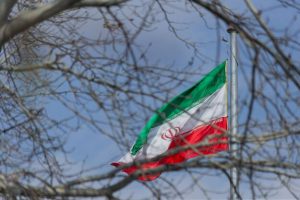
The war with Iran, begun by the US and Israel on 28 February 2026, involved Israeli and the US airstrikes on nuclear facilities, military and civilian infrastructure and the death of Supreme Leader Ayatollah Ali Khamenai—and other key religious and political leaders. But wars are judged by how they end, not by successes along the way. Much of the fighting is over, but the consequences—the brutal realties—of the war remain. As we near the end of summer 2026, what can we conclude about this war?
First, what about Iran’s nuclear capability—the primary reason for US and Israeli attacks in the first place—and control of the Strait of Hormuz, an unintended consequence of the war? As Reuel Marc Gerecht, resident scholar at the Foundation for the Defense of Democracies, and Ray Takeyh, senior fellow at the Council on Foreign Relations, argue “President Trump has done more to cripple Iran’s nuclear apparatus than his predecessors, but that may not matter. The memorandum of understanding sets the stage for an eventual nuclear revival, since what’s been blown up can be rebuilt as long as enough oil flows, the regime’s illicit dual-use import network remains operational, and U.S. and Israeli intelligence fails against Iranian vigilance . . . How the Iranian regime will likely win the war is a testament to its guile, ruthlessness and determination . . . Tehran’s new doctrine was dubbed ‘offensive deterrence.’ In response to a massive American-Israeli bombing campaign, the regime expanded the geography of the conflict, targeting the Gulf states and closing the strait. Iran showed scant concern for the energy interests of China—a great-power ally once thought capable of imposing restraints on the Islamic Republic.” Two conclusions:
- The memorandum of understanding reads: “The Islamic Republic of Iran will conduct dialogue with the Sultanate of Oman to define the future administration and maritime services in the Strait of Hormuz, in discussion with other Persian Gulf littoral states in line with the applicable international law and sovereign rights of coastal states of the Strait of Hormuz.” The Sunni Gulf kingdoms, which have always relied on the West to fend off menacing neighbors, are enjoined to come to terms with Persians.
- Javan, a mouthpiece of the Islamic Revolutionary Guard Corps, has spelled out the parameters of the new order. “In the regional arena, it became clear to neighboring countries that they had no choice but to engage positively and constructively with Iran.” “From now on, the Persian Gulf will be influenced by political and security arrangements centered on Iran.” This means that the Gulf states will both pay for protection and conduct their foreign policy in a manner consistent with Tehran’s preferences.
- “The Islamic Republic has achieved what Shah Mohammad Reza Pahlavi only dreamed of—effective control of the Gulf. The shah wanted to police the waterway to prove his bona fides to the West. The Islamic Republic intends to prove the opposite—that at last the West has been broken.”
Second is the brutal reality for Israel. A Wall Street Journal editorial captures that reality: “Tehran claims the U.S. is obliged to stop Israel from bombing Hezbollah, even as Hezbollah continues to kill Israeli soldiers and fire rockets and drones at civilians in northern Israel . . . Iran insists the Memorandum of Understanding requires that Mr. Trump treat Israel like an American proxy, though Israel is a sovereign democracy with a duty to its citizens to stop foreign bombardment. Perhaps Iran got this idea from listening to Mr. Trump and his Vice President. ‘Israel is fighting Hezbollah too long,’ Mr. Trump [stated], while declaring that Israeli Prime Minister Benjamin Netanyahu ‘has no f— judgment’ in how he responds to Hezbollah’s attacks. JD Vance was even more threatening. ‘The Israelis—just like everybody else—have to respect this peace process that is fundamentally good for them and good for the entire region,’ he said. Within hours of Mr. Vance’s blunt message to Israel . . . Hezbollah killed four Israeli troops. This guaranteed a retaliation, which Tehran then took as a pretext to postpone talks and threaten the Strait.”
“All of this skirmishing suggests that Iran believes it has the whip hand under the Memorandum of Understanding. As a precondition for a final nuclear deal, Iran will demand total Israeli withdrawal from southern Lebanon without disarming Hezbollah. The plan is to use this deal to squeeze Mr. Trump on the Israeli front—and all the others . . . Trump now finds himself in the position of attacking the best U.S. ally in the region for defending itself. Like Barack Obama, he risks becoming an apologist for Iran. This may win him support among Mr. Vance’s friends in MAGA’s anti-Israel wing. But it risks giving away the gains of his military campaign . . . And now those dastardly Israelis are the scapegoat for defending themselves against Iran’s Hezbollah proxy in Lebanon. Peace through weakness never lasts for long.”
Third, Iran as a “normal” country? In June, Vice President JD Vance said on CNN: “What the agreement does is fundamentally set up a structure whereby if the Iranians behave like a normal country, then we want to treat them like a normal country and welcome them to the world economy.” Vance is using that term, “normal country,” on network after network as he tries to sell the agreement. But the regime in Iran has never shown over 47 years that it wants to build a normal country or “join the international community.” At every turn it has banked U.S. relief and concessions and used them to promote terrorism and spread its Shiite revolution. Is this “normal?”
Editorially, the Wall Street Journal observes that “Every U.S. President since 1979 has had the same wish [a “normal country”], only to discover the regime had other plans.
- After the fall of the Shah, Jimmy Carter wanted to open a diplomatic channel with Ayatollah Khomeini’s regime and embrace it as the true voice of the people. He was rebuffed and his Presidency sunk by Iran’s seizure of the U.S. Embassy, with 52 U.S. diplomats held hostage for 444 days.
- Ronald Reagan tried as well, and the Iran-Contra affair sprung from misguided hopes of getting the regime to free other U.S. hostages, and from there move past hostility. Iran had taken the hostages via the terror groups it stood up in Lebanon to spread its revolution. These proxies murdered hundreds of Americans in suicide bombings and became the template for the Iran-backed militias that sow war across the region.
- George H.W. Bush tried to reach out to Tehran immediately with his inaugural address. Speaking of Americans held hostage, he told Iran, “goodwill begets goodwill.” But the regime wasn’t looking for goodwill.
- Iran was responsible for terror attacks across the region, including the Khobar Towers bombing that killed 19 U.S. servicemen and injured 400 in 1996. Bill Clinton then chased the “reformist” President Mohammed Khatami with gestures and concessions in the late 1990s only to discover the real power lay with the Ayatollah, who had no interest.
- George W. Bush included Iran in his “axis of evil” but declined to confront it, even as the Pentagon found it responsible for killing hundreds of U.S. soldiers in Iraq. Iran broke its nuclear program into pieces in those years but kept advancing it, lying and covering up evidence.
- Barack Obama muted his disapproval when Iran stole the 2009 election and murdered protesters. He did the same as Iran took over in Syria by massacring Assad regime opponents. A nuclear deal was said to be a path to a wider rapprochement. Iran signed in 2015 only when it could keep its nuclear facilities, continue enriching uranium and receive cash and sanctions relief. The regime then ramped up its intervention in Syria, its missile program and its support for proxy terrorism.
- Joe Biden came into office pledging to return to the nuclear deal after Donald Trump withdrew. Biden gave Iran billions of dollars and stopped enforcing oil sanctions. Iran responded with nuclear acceleration and a major war with Israel waged via proxies and then directly.
- Vance insisted on CNN that Iran’s regime is “a much different group of people” for whom “something has fundamentally transformed.” But there is scant evidence for it. Indeed, on CNBC Vance said, “you see people, both the hard-liners but also the more political people, saying ‘our relationship with the U.S. over the past 47 years has been a mistake, let’s turn over a new leaf.’”
Conclusion: “Mr. Vance and the President seem to believe that the lure of gleaming hotels and $300 billion in investment is enough for the regime to abandon its revolutionary cause. It could have had those hotels and prosperity for decades but always chose revolution and terror. If Iran really is committed to a new direction, it shouldn’t take 60 days to find out. If the regime won’t abandon its nuclear program, it prefers revolution.”
Finally, the effect this war has had on US allies. Linda Kinstler in the New York Times Magazine remarks that “The toll of the war was felt heavily at U.S. bases across the Middle East, which were thought to offer regional allies a security guarantee, assuring them of their safety under the American protective umbrella. The Iran war has exposed the fragility of that promise. The Navy’s base in Bahrain—one of the few in the region that hosts military families—was hastily evacuated before an Iranian attack damaged it. The Combined Air Operations Center at Al Udeid Air Base in Qatar is now reportedly inoperable. ‘This chain of bases across the Middle East were really effective—it was like having a string of pearls surrounding Iran,’ says Vali Nasr, a political scientist at Johns Hopkins University. But, he adds, ‘The way in which the U.S. was not able to defend them, and the way that they were damaged, has a nonmonetary cost to it that is quite significant.’”
Around the world, at least 51 nations host American military bases. These outposts let the U.S. project power and influence abroad and provide economic and military security to its allies. But after this war, friendly nations are weighing the risks of supporting the American war machine. “For any patriotic citizen of Qatar or any other Gulf country, the question arose over whether hosting U.S. military bases was worth it,” Maryam Al-Kuwari, a scholar of international relations at Qatar University, wrote in a briefing paper for her policy institute, the Arab Center. U.S. diplomats in Bahrain have warned of an emerging perception, fueled in part by Iranian social media bots, that the Americans left the nation alone to defend for itself . . . [The war] has enabled the rest of the world to clearly see what the White House cannot acknowledge: The United States is no longer the world’s unquestioned hegemon, and the promise of its protection is not absolute. The war in Iran marks the end of any lingering illusions of American omnipotence.”
A final conclusion: “Iran’s attacks against U.S. bases haven’t just exposed the vulnerability of the U.S. defensive umbrella. They have also showed that the safety of U.S. allies was not a deciding factor for the administration in contemplating war . . . For now, Washington is already staging its own kind of managed retreat, even if it is couched in the language of efficiency, optimization and prioritization. The Trump administration plans to pull 5,000 troops from Europe and hold off on deployments to the continent; just this month, the United States outlined plans to draw down its air support for Europe ahead of schedule. The recent national defense strategy announced that going forward, the United States would station “critical but more limited” forces on the Korean Peninsula. And Trump has frequently complained about the 60,000 American troops stationed in Japan as a counterweight to North Korea and China.”
The brutal realties of the Iran war are now becoming evident. It is difficult to argue that this war met the goals originally delineated by President Trump. In fact, it could be argued, it has unleashed a series of unintended and disturbing results that continue to unfold.
See Reuel Marc Gerecht and Ray Takeyh in thew Wall Street Journal (24 Juen 2026); Wall Street Journal editorial (22 June 2026 and 18 June 2026); and Linda Kinstler in the New York Times Magazine (28 June 2026), pp. 4-7.