The Iran War Has Changed The World
Oct 3rd, 2026 | By Dr. Jim Eckman | Category: Featured Issues, Politics & Current EventsThe mission of Issues in Perspective is to provide thoughtful, historical and biblically-centered perspectives on current ethical and cultural issues.
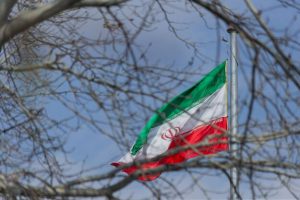
The war with Iran, begun by the US and Israel on 28 February 2026, involved Israeli and the US airstrikes on nuclear facilities, military and civilian infrastructure and the death of Supreme Leader Ayatollah Ali Khamenai—and other key religious and political leaders. It is now in its seventh month. There is little doubt that Iran has suffered enormous losses and is suffering terribly under the economic and financial sanctions imposed by the US. All attempts at negotiations have failed. Most importantly Iran is exercising significant control over the Strait of Hormuz. Traffic through the strait, which before the war averaged around 130 vessels each day, has collapsed to an average of 15 every day in August, according to ship trackers, under Iranian attacks and a U.S. blockade on Iran’s ports.
Nazee Moinian, an associate fellow at the Middle East Institute, has observed that the US has miscalculated in its assumptions about Iran: “The Iranian regime hides its vulnerability by acting immovable. Though it negotiates from a position of weakness, it frames survival itself as victory. This is how the regime’s elites have sought to control the narrative of the war, the pace of the talks and the terms of any deal . . . Washington keeps making four false assumptions about Iran.”
- First, U.S. officials assume that the regime is a rational actor weighing costs and benefits. Tehran has shown caution when facing existential threats, scaling back its ambitions and accepting soft compromises on its nuclear program. But it is also a revolutionary state, sustained since 1979 by ideological conviction as much as calculation. Washington holds vastly superior firepower. It can’t outmuscle the regime’s self-image as leader of an “axis of resistance,” a role its own founding myths assign it, an identity that makes ordinary compromise feel like apostasy, not prudence.
- Second, American negotiators assume that there is a fixed pain threshold at which the regime will break. That may hold some truth, but it is undercut by Washington’s impatience. The naval blockade the U.S. launched against Iranian oil exports on April 13 is a case in point: It cost Tehran an estimated $500 million a day, according to the Trump administration, yet it was paused in June before any meaningful concession had been extracted. The problem may not be that Tehran’s threshold is unreachable but that Washington keeps stopping short of it.
- Third, U.S. diplomats mistakenly believe that battlefield losses become negotiating losses. Total military defeat forcing surrender is the founding memory of American strategic culture, from 1945 to Iraq’s 100-hour rout during Operation Desert Storm in 1991. But those were ground-won victories, not air campaigns alone. Even in Kosovo, a case often cited for air power’s capacity to force capitulation from an adversary, the North Atlantic Treaty Organization prevailed only once a ground invasion looked imminent. Iran’s proxies are gutted, and its air defense has been breached twice, yet no invasion has followed, and its negotiators in Oman still behave as though they are winning.
- Fourth, the U.S. imagines that domestic unrest weakens a government’s hand abroad. Iran’s Islamic penal code treats domestic unrest as moharebeh, or “waging war against God,” an offense that can be punishable by death. Iran’s prosecutor general, Mohammad Movahedi-Azad, expanded that standard in January to include vandalizing public property and instructed prosecutors to pursue such cases without leniency. A regime willing to kill its citizens by the thousand has demonstrated that it can absorb and inflict a great deal of pain before it yields. It wants every negotiator across the table to understand that math.
Moinian concludes that “Tehran is wounded, not exhausted. Managing to survive two wars, a decapitated leadership, gutted air and naval defenses, weakened proxies and a spiraling economy have allowed it to play a weak hand strongly. But survival isn’t legitimacy, and aggression isn’t strength. The U.S. and Israel have drastically diminished the regime’s capabilities. American negotiators also need to abandon old assumptions for a more nuanced understanding and strategy. Until then, Tehran will continue to use its weakness to shuffle the cards.”
Whatever the outcome, the Iran War has dramatically reshaped the world, diplomatically, financially, economically and has produced a reshuffling of the balance power in the Middle East. Omar Abdel-Baqui, Rebecca Feng and Georgi Kantchev of the Wall Street Journal itemize the changes this war has produced:
- Oil has gone up, but not to a record: Dire predictions that the closure of the strait would catapult oil prices above $150 a barrel haven’t come to pass. Oil prices are hovering above $80 a barrel; gasoline prices are now around $4 a gallon, up from $2.98 before the war. Why the mismatch between expectation and reality? The forecasts failed to account for other ways to get oil out of the Persian Gulf, or how much China would curtail its oil imports. Still, the world has rapidly burned through its oil reserves. In the U.S., crude-oil inventories in the Strategic Petroleum Reserve have fallen to their lowest level since the 1980s.
- Shipping oil takes longer and costs more: Sailing an oil supertanker from the Persian Gulf to China now costs around more than $500,000 a day, according to maritime data provider Clarksons Research; that is more than double the rate before Iran began attacking the strait. The increase has been driven by sharply higher expenses, including higher insurance costs, and a decline in the number of shippers willing to make the sometimes dangerous voyages. The routes are also longer. After the strait closed, Houthi militants, backed by Iran, announced a blockade of Saudi Arabia in the Red Sea, forcing some shippers to reroute via the Suez Canal—adding around 30 days to the journey to Asia.
- New routes have emerged to get oil out of the Gulf: Gulf energy producers such as the United Arab Emirates, Kuwait and Iraq are pouring billions of dollars into new oil pipelines, part of a redrawing of the region’s logistics map, as trade shifts toward trucking, rail and new ports.
- Iran’s military capabilities have been eroded: The U.S. struck more than 13,000 targets in Iran before the April 8 ceasefire and destroyed most of the country’s navy. The fleet of fast attack boats Tehran uses to control the Strait of Hormuz hasn’t been wiped out, however, and Iran continues to fire on commercial ships with drones and missiles . . . [But] U.S. officials have noted that the ballistic missiles Iran is now using seem faster and able to maneuver as they streak toward the earth. Their observations appear to describe a military that is adapting, not crumbling.
- Iran has adopted a more aggressive posture: Since the death of his father and predecessor in the opening strike of the war, Iran’s Supreme Leader Mojtaba Khamenei has positioned his forces for a bigger fight. The aim is to tighten the military chain of command, turn an ideological militia into a neighborhood-based intelligence agency and emphasize an offensive approach. The Islamic Revolutionary Guard Corps, which protects the regime, has laid the groundwork with allied militias to step up attacks if needed, sending advisers to Iraq, Yemen and Lebanon to discuss plans.
- Iran’s ability to make a nuclear weapon has been set back: Most damage to the regime’s core nuclear facilities was done during the U.S.-Israeli strikes in June 2025 . . . Estimates vary on how much Iran’s ability to make a nuclear bomb has been set back, from several months to several years.
- Iran’s economy has suffered a body blow: Consumer prices in Iran are up over 80% from last year, while the International Monetary Fund expects the Iranian economy to shrink 5.4% this year. But shifting the economic burden onto households enables the regime to endure and resist pressure to make concessions. Under the U.S. blockade, Iran’s shipments of crude and condensate fell to roughly 280,000 barrels a day in May, from over 2.2 million in February.
- U.S. bases in the Gulf are now a target as much as a shield: Extensive damage done to the sole U.S. naval base in the Middle East (in Bahrain)—along with hits to at least 20 U.S. sites across the region, including military installations and diplomatic facilities—made the U.S. re-evaluate its entire footprint in the region, The Wall Street Journal reported. Before the war, some military officials warned that bases in the Gulf were exposed. A proposal to move installations farther west was floated in Trump’s first term but wasn’t acted upon.
- The war’s cost has mounted: Defense Secretary Pete Hegseth estimated the latest cost of the Iran war at $37.5 billion in July before the most recent bout of strikes in August.
- Inflation’s decline has reversed: Higher oil, gas, fertilizer and transport prices have weighed on growth, hurting energy-importing economies in Europe and Asia the most. The IMF now expects global inflation to rise to 4.7% this year from 4.1% in 2025, interrupting a descent that had been under way since 2024.
- Countries have forged new alliances: U.S. allies Turkey, Saudi Arabia and Pakistan signed a collective defense pact in early August as the war has raised questions about the reliability of the American security umbrella.
- Support for the war among U.S. voters has slipped: Approval for the war among registered voters surveyed has fallen from 50% at the end of February when the conflict began, to 43% support for military action in mid-July as the fighting flared, according to polling by Fox News.
- Deaths have slowed as the conflict has worn into a standoff: The war has killed more than 3,600 people in Iran, according to Human Rights Activists News Agency, most if not all before the April 8 temporary ceasefire. Some 18 U.S. servicemembers died as a result of Iranian drone and missile attacks on U.S. bases and military mishaps with hundreds more injured. Across Arab Gulf countries, retaliatory attacks by Iranian authorities and allied armed groups left 28 civilians dead and hundreds more injured up to June 3, according to Amnesty International.
When he was running for president in 2016, 2020 and 2024, President Trump lamented the “endless wars” of Iraq and Afghanistan and promised that, if elected, there would no longer be such wars. But his decision to make war on Iran is increasingly looking like an “endless war.” Many of his military advisers warned him that bombing Iran would result in the closing of the Strait of Hormuz. He belittled that claim. Moinian, cited earlier in this essay, has shown how the wrong assumptions about Iran have produced this quagmire. The Iran war has profoundly changed the Middle East, indeed the world. And, as of this writing, no one has any idea of how this war will end. It is turning into another “endless war.”
See Nazee Moinian in the Wall Street Journal (14 August 2026) and Omar Abdel-Baqui, Rebecca Feng and Georgi Kantchev in the Wall Street Journal (28 August 2026).