Pope Leo XIV: AI And Humans As Machines
Jul 11th, 2026 | By Dr. Jim Eckman | Category: Featured Issues, Politics & Current EventsThe mission of Issues in Perspective is to provide thoughtful, historical and biblically-centered perspectives on current ethical and cultural issues.
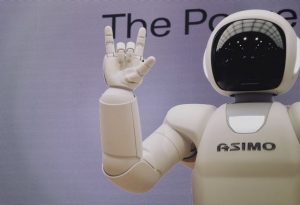
Pope Leo’s first encyclical, Magnifica Humanitas (“Magnificent Humanity”), is very long (more than 42,300 words). Although he deals with multiple issues, the central purpose of the document, however, is to challenge the unregulated development of artificial intelligence, which is of great interest to me. “Too often the debate over AI presents two extremes. Technological pessimists speak as if modernity itself were a mistake. Technocrats and transhumanists greet every computational advance as a step toward transcendence. One side would smash the machines; the other would surrender to them.”
He offers a critique of the worldview behind much of AI. The Economist accurately summarizes this element of the encyclical: “At its philosophical core, it is a rebuttal of two views of humanity’s destiny that are popular in Silicon Valley and the tech community: transhumanism and posthumanism. Leo describes the first as envisaging ‘the enhancement of human beings through technologies’, such as body engineering, devices and algorithms, and the second as the ‘hybridization of human beings, machines and the environment.’ In its extreme forms, posthumanism looks forward to a point at which ‘humanity surpasses itself in a new evolutionary stage’ . . . What unites trans- and posthumanism, Leo says, is an enthusiasm for ‘a supposed optimization of the species.’ That was also the aim of 20th-century eugenics, popular with Nazis and Fascists. Magnifica Humanitas argues that trans- and posthumanism carry similar risks: ‘If the human being is treated as something to be perfected or surpassed, it becomes easier to accept that some lives are less useful, less desirable or less worthy. In the name of progress, ‘necessary sacrifices’ may begin to be justified’ . . . The nub is that ‘humanity—in all its grandeur and woundedness—must never be replaced or surpassed.’”
Several additional observations:
- “The encyclical looks like the opening salvo in a philosophical turf war. The technological optimism of Silicon Valley looks forward to an “apocalyptic moment in which humans acquire god-like attributes. That eschatology seems modelled on the Christian narrative, but with its guts ripped out and replaced with something else. The Pope is no fan of a worldview that sees the coming of artificial general intelligence in messianic terms. That many MAGA-leaning AI enthusiasts, such as Peter Thiel, an influential tech investor, are vocal Christians adds spice to the debate.”
- Leo nevertheless stresses that he is not anti-technology. The encyclical praises entrepreneurial initiative as a worthy vocation and recognizes the enormous potential of innovation to alleviate suffering and expand opportunity. Nor does he reject markets and private property. The document reaffirms the Catholic tradition’s defense of private ownership while emphasizing its social responsibilities. “Technological development has significantly improved the living conditions of humanity,” he argues.
- But Pope Leo XIV’s first encyclical, observes the Wall Street Journal, “arrives at a moment of genuine civilizational anxiety. AI promises gains in productivity, medicine and scientific discovery. But it also raises fears about economic displacement, surveillance, social manipulation and concentration of power in the hands of technological elites. At one level there is a growing backlash against the impact of AI: In the US and overseas, workers are concerned about job losses. College graduates are booing commencement speakers who invoke AI. Residents are protesting energy-hungry data centers. A man threw a Molotov cocktail at the house of OpenAI’s Sam Altman.”
- At the presentation of the encyclical, Leo was accompanied by Christopher Olah, a co-founder and safety researcher at AI firm Anthropic, which has tried to position itself as a proponent of AI safety.
Robert Sirico, President Emeritus and co-founder of the Acton Institute, offers this astute reflection: “Examining that puzzle reveals that the real subject of debate isn’t AI but anthropology. Every technological system presupposes some notion of what human beings are. If we are merely biological machines—producers, consumers or data points—then superior computational systems threaten to eclipse humanity. But if we possess an intrinsic dignity that transcends utility, efficiency and economic value, if we are distinct from machines, then technology can remain servant rather than master. This distinction runs through Magnifica Humanitas. Pope Leo warns repeatedly against both economism and scientism: the temptation to reduce human beings to market functions or material processes. Society loses sight of human reality ‘when the economy turns against the person or science oversteps the limits of its competence,’ he writes.”
Therefore, “The pope’s concern is power. AI, digital platforms and algorithmic systems increasingly place control over communication, finance, labor and culture in the hands of a few people. This concentration of power risks creating new forms of dependency and social control incompatible with human nature and freedom. The pope knows that some contemporary responses to technological concentration may worsen the problem they seek to solve. There is growing pressure to treat the state as the primary regulator of the AI revolution. Yet an overly centralized administrative approach may simply relocate concentrated power from private elites to managerial bureaucracies operating at even greater distance from ordinary communities and persons . . . This insight has enormous implications for the governance of technology. The future of artificial intelligence can’t safely be entrusted either to giant corporations or giant states. A humane technological order requires a robust civil society: universities, localities, entrepreneurs, churches, professional associations and especially families capable of exercising moral responsibility and cultivating virtue. Regulation matters, but it doesn’t build civilization . . . Pope Leo recognizes that the danger posed by artificial intelligence isn’t only economic disruption or surveillance. The deepest danger is that we come to see ourselves as machines and therefore accept being governed as machines.”
Finally, Ruth Graham and Elizabeth Dias provide a helpful summary of the key talking points of Leo’s encyclical:
- A.I. is fundamentally not human. So-called artificial intelligences do not undergo experiences, do not possess a body, do not feel joy or pain, do not mature through relationships and do not know from within what love, work, friendship or responsibility mean.
- Humane labor practices and just wages remain essential. The various kinds of job insecurity, fragmented career paths and automation must not be evaluated solely in terms of efficiency, but in relation to the dignity of the worker, the right to sufficient remuneration and the genuine possibility of participating in society.
- No technology can take away the dignity of ordinary human beings. “The value of persons, however, does not depend on what they achieve or produce,” Leo writes elsewhere in the text. “There are rights that apply to everyone simply by virtue of being human.” The document uses the word “dignity” 100 times.
- Beware the temptation of erecting a new Tower of Babel. Leo uses the Tower of Babel as an illustration of the pitfalls of pursuing uniformity and standardization, and the limits of ambitious undertakings that appear able to compete with the claims of religion. As many aspects of global culture homogenize, and technology becomes a kind of universal language, Leo’s call for humility and diversity stands in contrast. It’s also a reminder that many of the seemingly new ethical and social challenges posed by A.I. have ancient roots.
- (Human) life is beautiful. For this reason, humanity — in all its grandeur and woundedness — must never be replaced or surpassed. We can embrace the technological progress that alleviates suffering and unlocks new possibilities, provided that we do not abandon the very essence of our humanity, namely the capacity for relationship and love.
Pope Leo’s encyclical is a necessary contribution to the debate about AI and where this amazing technology is taking us as a civilization. He affirms the value and worth of human life and its beauty and importance in God’s created order. We are God’s theocratic stewards, created in His image and likeness, and, as those stewards, it is our stewardship responsibility to manage technology well and to His glory. Technology is a tool, not an idol. The Apostle Paul’s admonition in 1 Corinthians 6:12 certainly applies: “All things are lawful for me, but not all things are helpful. All things are lawful for me, but I will not be dominated by anything.” [ESV]
See The Economist (30 May 2026), pp. 53-54; Wall Street Journal (26 May 2026), p. A-10; Robert Sirico in the Wall Street Journal (29 May 2026); Ruth Graham and Elizabeth Dias in the New York Times (25 May 2026); Elizabeht Dias in the New York Times (27 May 2026); Russell Moore, Moore to the Point (27 May 2026).