A Reordering Of The World
Feb 21st, 2026 | By Dr. Jim Eckman | Category: Featured Issues, Politics & Current EventsThe mission of Issues in Perspective is to provide thoughtful, historical and biblically-centered perspectives on current ethical and cultural issues.
The world order put together by the United States after World War II is coming apart. For example, last year marked the 80th anniversary of the 1945 United Nations Charter, a document signed by 51 nations at the close of World War II. The signatories pledged to act “to save succeeding generations from the scourge of war.” The great powers have not gone to war with one another since, and no U.N. member state has disappeared because of conquest. But over the past decade, that peace has begun to unravel. Today, it is on the precipice of collapsing altogether. Oona Hathaway comments that “According to my calculations, from 1989 to 2014, battle-related deaths from cross-border conflicts averaged fewer than 15,000 a year. Beginning in 2014, the average has risen to over 100,000 a year. As states increasingly disregard limits on the lawful use of force, this may be just the beginning of a deadly new era of conflict.”
For centuries, historically, war was perfectly legal. It was, in fact, the main way in which states resolved their disputes. Nations might have compelled each other to sign treaties under threat of force and used military action to uphold those agreements if they were violated. States that won wars had the legal right to keep what they took—land, goods, people. States rose and fell, took land and lost it, and the people living in the territory over which they fought suffered the consequences. As Hathaway demonstrates, “That system of legal war began to end after World War I, when, in 1928, states renounced the act of war in the signing of the Kellogg-Briand Pact. That commitment was reaffirmed in 1945 in the U.N. Charter, which placed the commitment to renounce war at the center of a new international legal order. Territorial conquest and gunboat diplomacy, once legal, became illegal; economic sanctions replaced war as the main tool of international law enforcement; and waging war could be criminally prosecuted, as it was in the Nuremberg and Tokyo trials after World War II. The peace was never perfect. Conflicts in Korea, Vietnam and Cambodia were early and terrible failures. The number of states in the world multiplied as decolonization took hold, and civil wars, which are not regulated by the charter, became more frequent.” Yet the pact accomplished something remarkable: Conquest, once common, became rare, and fewer people died because of nations joining in conflicts outside their own borders.
Beginning in the early 2000s, the legal constraints on war began to erode. “After Al Qaeda’s devastating attacks on the United States on Sept. 11, 2001, the United States began to use force throughout the Middle East against those it deemed to be a terrorist threat.” To justify continuing the strikes and extending them to a range of terrorist groups, the United States claimed a legal right under the U.N. Charter: to defend itself against nonstate groups that it said posed a threat. “Up to that point, it had been generally accepted among U.N. members that the right of self-defense in the charter extended only to threats posed by other states. By expanding this claim to threats posed by nonstate groups, the United States opened the door for other states to use unilateral force internationally under a legal guise. Over the next decade or so, more and more governments adopted the theory.”
By 2014, the consequences of this shift started to emerge. With the rise of the Islamic State, the United States stepped up its counterterrorism efforts throughout the Middle East, and many other nations joined the fight. That same year, the United States and NATO officially concluded combat operations in Afghanistan, but they continued to provide significant support to Afghan forces. The last decade also saw a surge of deadly conflicts in Syria, Iraq, Ethiopia, Yemen, the Democratic Republic of Congo, Nigeria, Somalia, Libya and Gaza, with outside states joining in those conflicts, usually citing a right of self-defense. Hundreds of thousands of people died as a result.
This re-ordering of the world begs the question about President Trump’s order to seize President Nicolás Maduro of Venezuela in a daring raid. David Pierson writes that “The speed with which U.S. forces acted afterward to capture Mr. Maduro sent a blunt message to Beijing about the limits of its influence in a region that Washington treats as its own. China now risks losing ground in Venezuela after Saturday’s assault in Caracas, despite decades of investment and billions of dollars in loans. But the assault also reinforces a broader logic that ultimately favors President Xi Jinping’s vision of China and its status in Asia: when powerful countries impose their will close to home, others tend to step back.”
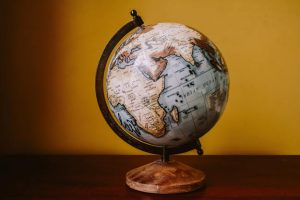
The White House has framed the Maduro operation as part of an updated Monroe Doctrine, or as President Trump describes it, the “Donroe Doctrine.” A globe carved into spheres of influence—with the United States dominating the Western Hemisphere and China asserting primacy across the Asia-Pacific—and where might makes right, regardless of shared rules, could benefit Beijing in a number of ways. Indeed, Stephen Miller, a top aide to Trump, articulated this doctrine in an interview with the CNN host Jake Tapper: “We live in a world, in the real world, Jake, that is governed by strength, that is governed by force, that is governed by power,” he said. “These are the iron laws of the world since the beginning of time.” Such a doctrine could undercut Washington’s criticism of Beijing when Chinese forces elbow their way across contested waters of the South China Sea and menace Taiwan, the island democracy China claims as its own.
David French adds several other potential ramifications in the unraveling of the post-World War II order. One does not need to agree with everything he argues, but anyone who is intellectually honest must consider his observations. Furthermore, as Christians it is imperative to remember that we live in a fallen, broken world.
- The United States is embracing a 19th-century view of war and warfare at the expense of the bitter lessons learned in two world wars. The attack on Venezuela harks back to a different time, before the 19th-century world order unraveled, before two catastrophic world wars and before the creation of international legal and diplomatic structures designed to stop nations from doing exactly what the United States just did. “When a strong state operates under the principle that war is just another extension of policy, it is tempted to operate a bit like a mob boss.” Diplomacy and economic pressure are almost always still a first resort for powerful nations, but if they fail to achieve the intended results, “you can watch footage from the American strike in Venezuela to know what can happen next.”
- Consider history since World War I: After the ongoing slaughter of trench warfare, the world attempted to ban aggressive warfare and to establish an international institution — the League of Nations—to keep the peace. The League failed, in part because the United States refused to join, and after an even more horrible world war, the world tried again, this time under American leadership. Echoes of the Just War theory are all over the United Nations Charter: Article 2 of the U.N. Charter bans aggressive warfare; Article 51 permits individual and collective self-defense to keep great powers in check; and Chapter V established a body (the Security Council) that’s designed to keep the peace. “No one would argue that the system is perfect. We’ve seen wars of aggression since World War II, but the system has achieved its primary goal. The world has been spared total war.”
- In an article for The Free Press, the historian Niall Ferguson argued that Trump’s attack on Venezuela was a piece of a much larger whole, the restoration of the politics and diplomacy of 1900—the years before the catastrophe of World War I. “The gunboat diplomacy of the Gilded Age certainly meant that the United States dominated Central and South America. It imposed a quasi-colonial reality on the region. Each nation developed under at least some degree of American oversight. Every nation was only as sovereign as the United States allowed it to be.”
- Trump set a precedent with his intervention in Venezuela—a precedent that nations such as Russia, China and Iran will be eager to follow in their own spheres of influence. We will have no standing to object when our adversaries take the same approach to countries in their spheres of influence that we took in ours. “Vladimir Putin’s Russia, Xi Jinping’s China and revolutionary Iran have never had the slightest concern for just-war theory or any moral argument. They’re held in check (to the extent they are) by deterrence, or, when deterrence fails, raw military force.”
- We can barely keep the world order together when only three of the five permanent members of the Security Council—the United States, Britain and France—comply with the U.N. Charter and international law. But if the United States joins Russia and China in their approach to armed conflict and international relations, then the Western postwar consensus is truly dead.
- Finally, Trump has consistently argued that “We need Greenland from the standpoint of national security.” If there is anything that could decisively wreck NATO, it would be an attempt to annex Greenland. Annexation could conceivably empower Denmark to invoke Article 5, the collective self-defense provision of the North Atlantic Treaty, against the United States. But there’s a further problem: The true international norm is that when the strong dominate the weak, the weak try to become strong. That can mean alliances with enemies. That can mean global rearmament. That can mean nuclear proliferation. It can also mean that a foolish world once again endures the high cost of forgetting what it’s like when great powers go to war.”
This re-ordering of the world is simply the world devolving into what used to be called “spheres of influence:” “Russia dominating Europe, China dominating Asia and the United States dominating the Americas.” There is no longer any commitment to democracy or human rights in the world arena. It is the will to power in these respective “spheres of influence.” It is difficult to view this as a positive development in world affairs.
See Oona A. Hathaway in the New York Times (7 January 2026); David Pierson in the New York Times (7 January 2026); David French in the New York Times (6 January 2026); and Peggy Noonan in the Wall Street Journal (10-11 January 2026).