An Update: Ukraine, Russia, America And Europe
Jun 13th, 2026 | By Dr. Jim Eckman | Category: Featured Issues, Politics & Current EventsThe mission of Issues in Perspective is to provide thoughtful, historical and biblically-centered perspectives on current ethical and cultural issues.
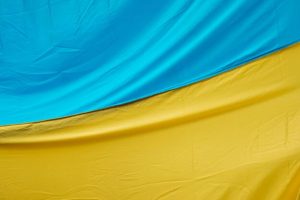
Christian columnist and attorney David French makes this astonishing observation: “A remarkable thing has happened on the world’s battlefields. Ukraine—a nation that was supposed to dissolve within days of a Russian invasion—has fought Russia to a stalemate, revolutionizing land warfare in the process. It has become an indispensable security partner in the Western alliance, including in the war against Iran. Now, Volodymyr Zelensky, Ukraine’s president, is taking the next step, one that would have been unthinkable even as recently as 2024. By word and deed, he’s showing Europe and the world how the post-American free world can preserve its liberty and independence.”
French also makes these observations:
- It’s no longer accurate to think of Ukraine as a desperate underdog; it’s becoming an independent power. Even as it fights for its life against Russia, it’s reportedly reaching defense deals with the Gulf states and with the United States — and this time it’s Ukraine that’s providing military assistance. This might be difficult for many readers to grasp — given our nation’s longstanding military supremacy — but the largest and most battle-hardened land force in the Western world may well be the Ukrainian Army. While the precise numbers are classified, the Atlantic Council estimated in 2025 that Ukraine had roughly a million men and women under arms, the vast majority of whom serve in the ground forces. Its army is still vast, and its military is the only Western force that has fully adapted to modern drone warfare. Indeed, Ukraine is arguably the world’s leader in drone warfare.
- Rapid change isn’t occurring just in Ukraine. Other developments across the Western alliance show that European nations are working with shocking speed to free themselves from dependence on America. France is expanding its nuclear arsenal and increasing its defense spending. It is even changing its nuclear doctrine to allow it to deploy nuclear-armed aircraft outside France. Germany has approved a plan to spend up to a trillion euros on defense and infrastructure. It has also set the goal of creating the strongest military in Europe by 2039. Canada is enacting its own defense budget increases—with the added twist that it will be spending far less money on American weapons.
Veteran columnist David Ignatius further comments that “European defense leaders voiced solidarity with Ukraine in a war against Russia that they now see as a common fight. ‘We should be in awe, admiration, and gratitude for what Ukraine is doing,’ Adm. Tony Radakin, Britain’s former chief of defense, told the gathering. Europeans seem to realize that, in confronting a growing threat from Russian President Vladimir Putin, they need Ukraine’s strong military as much as Kyiv needs support from European capitals. ‘Ukraine has become a fortress, a lesson Europe would do well to learn,’ Clancy told the conference. Ukraine has one thing that Europe (and most other countries) desperately need, which is expertise in drone warfare—both offense and defense. The Ukrainians are offering to share this experience with partners, and the Kyiv gathering at times seemed almost a sales conference for Ukrainian drone-makers . . . Ukraine currently neutralizes 70 percent of Russia’s drone attacks and hopes to boost that kill rate to more than 90 percent by the end of this year, Yarmak said. ‘My message to our European partners is that you should build air defense capability quickly. An attack of 500 drones in one day can lead to your capitulation.’”
America’s commitment to Ukraine under President Trump has been incredibly disappointing. Ross Douthat: “A lot of Ukraine’s champions . . . would say, our Ukraine policy has been a betrayal, with unjust pressure on Kyiv to make a deal and an unfair retraction of American support. It’s just that Ukrainian heroism and European support have filled the breach, proving along the way that Trump and others were wrong to treat the war effort as foredoomed . . . The Trump administration’s push for a negotiated peace reflected, in part, an assumption that Ukraine’s time was running out. Instead, bravery, resilience and the drone war revolution have enabled the Ukrainians to keep the Russians stalemated, to such a degree that the Putin regime looks more unstable and paranoid than at any point since the early days of the war.”
Indeed, Ukraine is engaging in remarkable drone attacks deep inside Russia. Jillian Kay Melchior, Wall Street Journal board member located in London, writes that “Ukraine is accelerating its long-range strike campaign on Russian territory, which, in addition to causing military and economic damage, is having a psychological effect . . . Mr. Putin is spending more time in underground bunkers,’ the Financial Times reports, and he is taking other security precautions amid Kremlin concerns ‘over a coup d’état or an assassination attempt, specifically involving drones. . . ‘At this stage of the war, Russia’s air defense system is proving to be weak,’ says Anton Zemlianyi of the Ukrainian Security and Cooperation Center, a Kyiv-based think tank. Ukraine has attacked Russian air defenses with the goal of creating corridors where long-range weapons can break through. Russian air defenses are ‘concentrated around Moscow and Vladimir Putin’s residences,’ and the Kremlin is also likely running low on some types of interceptors, Mr. Zemlianyi says.”
Furthermore,
- “As of May 5, Ukraine had carried out at least 136 successful attacks on targets in Russia this year, including at least 42 since April 1, according to Mr. Zemlianyi. These numbers, provided exclusively to me, are from open-source data, and each strike has been visually confirmed and geolocated, he says. The Institute for the Study of War looked at Ukrainian strikes in March and April on Russian territory at least 31 miles behind the front line and reported similar figures . . . This spring Kyiv has repeatedly hit oil infrastructure and ports that are vital for Russia’s energy exports via the Baltic and Black seas. Ukraine has also stepped-up attacks on the Russian energy hub of Perm, more than 900 miles deep in central Russia. A series of strikes there last week burned roughly 70% of the Transneft Perm Linear Production Dispatch Station, a major pumping, storage and distribution hub for Russia to transport Siberian oil, according to the Institute for the Study of War.”
- Russia’s size is becoming a vulnerability. “The Russians are realizing that they simply don’t have enough air defenses to cover an area that huge,” says Fred Kagan of the American Enterprise Institute. “They cannot be sure they can defend against Ukraine drone attacks on Victory Day”—a realization that “shocks the complacency of an elite that has been treating the war as an expeditionary operation that was not affecting the homeland.”
Finally, respected columnist Walter Russelll Mead of the Wall Street Journal sees Putin as the man who broke Russia: “That once seemed unthinkable. For more than a decade, Mr. Putin outmaneuvered a series of clueless Western leaders. The Russian leader’s penetrating and unsentimental understanding of his opponents let him inflict one humiliating setback after another on an overconfident West. Among those humiliations were the 2008 invasion of Georgia, the 2014 seizure of Crimea and much of the Donbas, and the revival of Russian power in the Middle East while President Obama walked away from his red line in Syria. The defense of Belarus’s President Alexander Lukashenko against a tsunami of popular protests and the displacement of French power across much of France’s former colonial empire in Africa also advanced Mr. Putin’s goal of making Russia great again. But then the master of the Kremlin made a critical error. Ukraine wasn’t a real country, he reasoned. Its people weren’t nationalist. Its government was a hollow shell.”
“That turned out to be wrong. A critical mass of Ukrainians was willing to fight and die for the country Mr. Putin arrogantly dismissed. Their leader, President Volodymyr Zelensky, turned out to be a gifted politician and diplomat who kept his people united at home while patiently amassing international support.”
- Even as he struggles vainly in Ukraine, Mr. Putin has been forced to watch the decline of Russian influence in Europe. Viktor Orbán’s defeat in Hungary deprived Russia of its closest European ally. Mr. Putin may now have to watch helplessly as Hungarian investigators aid their Western colleagues tracing the flows of Russian dark money into European business and political circles. Meanwhile, the Europeans, divided as they are and disoriented by the trans-Atlantic rift, have found the financial means to keep Ukraine in the war and can likely shore up Ukraine for the foreseeable future.
- Meanwhile, the Ukraine war is exacerbating Russia’s demographic decline. Hundreds of thousands of military-age men have been killed in the war; hundreds of thousands more, including many of Russia’s best-educated, fled the country to avoid being fed into the meat grinder. Even as Russia’s Muslim minority populations grow, the Slavic Russian population seems fated to continue to decline at an accelerating rate.
- Putin has proved unable to stem the decline of Russian influence across the rest of the post-Soviet space. Armenia and Azerbaijan are actively cooperating with the West. Some Central Asian republics now have closer economic ties with China than with Russia. They welcome the expansion of pipeline routes to the West that bypass Russia and are attracting investment from Turkey and the European Union.
- Farther afield, Mr. Putin’s once-promising attempt to reinsert Russia into the Middle East has flagged. Longtime ally Bashar al-Assad fell from power. Russia has been unable to exert significant influence over military or diplomatic events in the conflict between the U.S. and Iran. Russia’s African adventure isn’t going well either. Military setbacks in Mali have undermined Russian power and prestige, worsening relations with disappointed African governments that expected more help against jihadist rebels than Russia’s overstretched forces can provide.
Mead cautions, however, that “Russia’s wily president shouldn’t be written off. Whatever one thinks of his morals, Mr. Putin has frequently demonstrated uncanny daring and skill. But unless he can summon the energy and creativity to extricate himself from this predicament, he may be remembered by history as the leader on whose watch Russia’s standing as a serious great power was finally and fatally lost.”
This summer America will celebrate its 250th anniversary as an independent nation. The 13 British colonies of North America stood against the most powerful nation in the world in 1776—and by 1781 were successful in the defeat of that nation. Today, Ukraine is standing against a formidable power—and with amazing success. America should be celebrating and aiding the resilience of the Ukrainian people. But our President admires Putin and degrades Ukraine. He should be embracing a similar cause of independence. He is not—and for that he should be ashamed of himself.
See David French in the New York Times (26 April 2026); David Ignatius in the Washington Post (28 April 206); Ross Douthat in the New York Times (29 April 2026); Walter Russell Mead in the Wall Street Journal (5 May 2026); and Jillian Kay Melchior in the Wall Street Journal (8 May 2026).